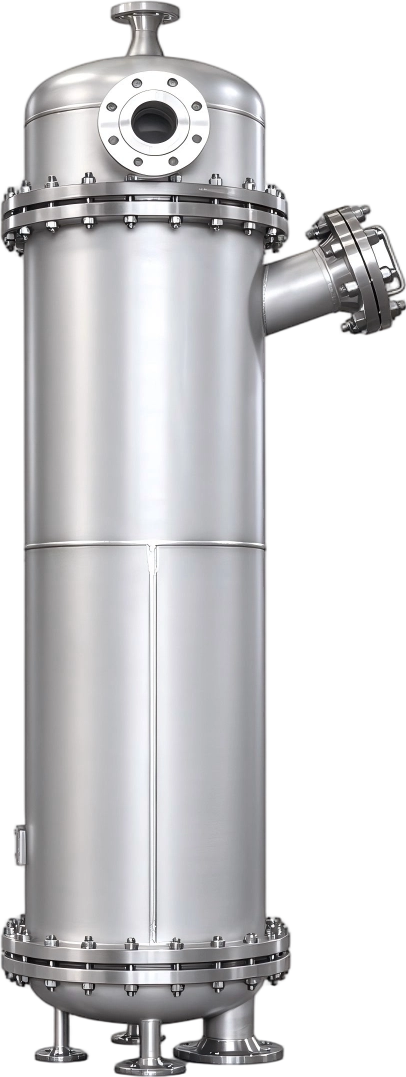
Product Overview
The Spiral Plate Heat Exchanger is a highly efficient, compact heat exchange device. With its compact design, low fluid resistance, and high adaptability, it is widely used in industries such as pharmaceuticals, chemical engineering, fine chemicals, food and oils, and environmental protection.
Key Features & Working Principles
- Heat Exchange — To facilitate heat exchange (heating or cooling) between two fluids
- Modular Structure — Multiple units can be connected in series or in parallel to accommodate larger heat transfer areas or special processes.
Applications
In industries such as pharmaceuticals, chemicals, and food processing, these systems are used for heating and cooling pharmaceutical solutions, maintaining a constant temperature in fermentation tanks, condensing solvent vapors, heat exchange involving highly corrosive media, temperature control of polymer resins, heating acidic and alkaline solutions, recovering waste heat from industrial wastewater, and controlling the temperature of flocculation reactions in wastewater treatment. Chemical Industry Pharmaceutical Industry Food Industry Environmental Protection Industry
Product Structure
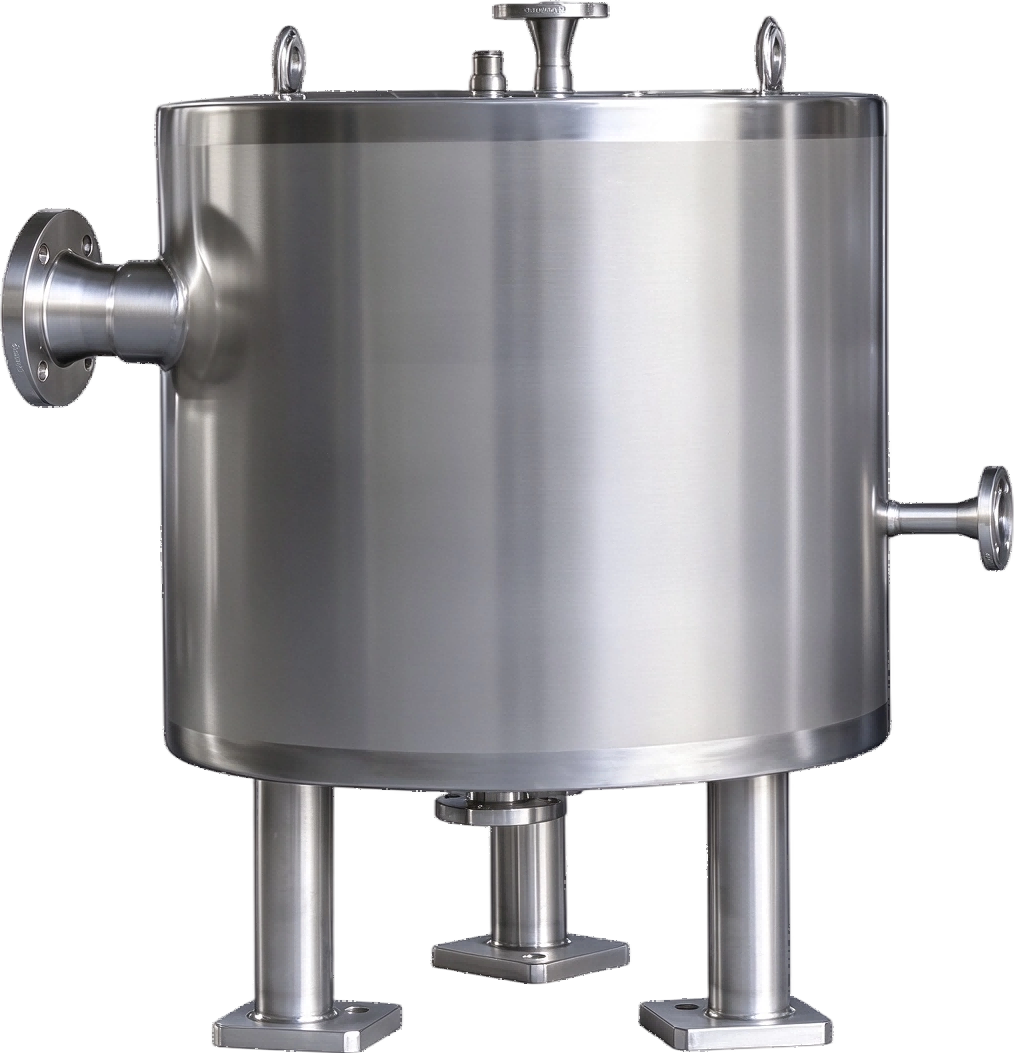
- Main Unit — Two separate spiral flow channels are formed by the heat transfer plate, through which fluids A and B flow, respectively. Spacer columns are welded to the heat transfer plate to ensure a constant channel spacing and to enhance turbulence. A central partition separates the inlet and outlet of the two fluids, enabling countercurrent flow.
- Tangential Nozzle — The inlet and outlet ports are designed to be tangential to minimize fluid resistance.
Optional Features
- Custom Materials
- Surface Finishes
- Structural Combinations
Technical Specifications
| Heat Transfer Area (m²) | Channel Spacing (mm) | Coil Plate Thickness (mm) | Material Inlet & Outlet | Cooling Water Inlet & Outlet |
|---|---|---|---|---|
| 2 | 10 / 12 | 2 / 2.5 / 3 | DN25 | DN25 |
| 3 | 10 / 12 / 19 | 2 / 2.5 / 3 | — | — |
| 4 | 10 / 12 | 2 / 2.5 / 3 | DN25 | DN25 |
| 5 | 10 / 12 | 2 / 2.5 / 5 | DN40 | DN25 |
| 6 | 10 / 12 | 2 / 2.5 / 5 | DN40 | DN40 |
| 8 | 10 / 12 | 2 / 2.5 / 5 | DN40 | DN40 |
| 10 | 10 / 12 | 2 / 2.5 / 5 | DN50 | DN40 / DN50 |
| 12 | 10 / 12 | 2 / 2.5 / 5 | DN50 | DN40 / DN50 |
| 15 | 10 / 12 | 2 / 2.5 / 5 | DN50 | DN40 / DN150 |
| 20 | 10 / 12 | 2 / 2.5 / 5 | DN50 / DN80 | DN50 / DN80 |
| 25 | 10 / 12 | 2 / 2.5 / 5 | DN50 / DN80 | DN60 / DN100 |
| 30 | 10 / 12 | 2 / 2.5 / 5 | DN80 / DN100 | DN80 / DN100 |
| 40 | 10 / 12 | 2 / 2.5 / 5 | DN80 / DN100 | DN60 / DN100 |
| 50 | 10 / 12 | 2 / 2.5 / 5 | DN100 / DN125 | DN100 / DN125 |
Custom design and manufacturing are available according to users' special requirements, such as material, structure, specification and dimension.