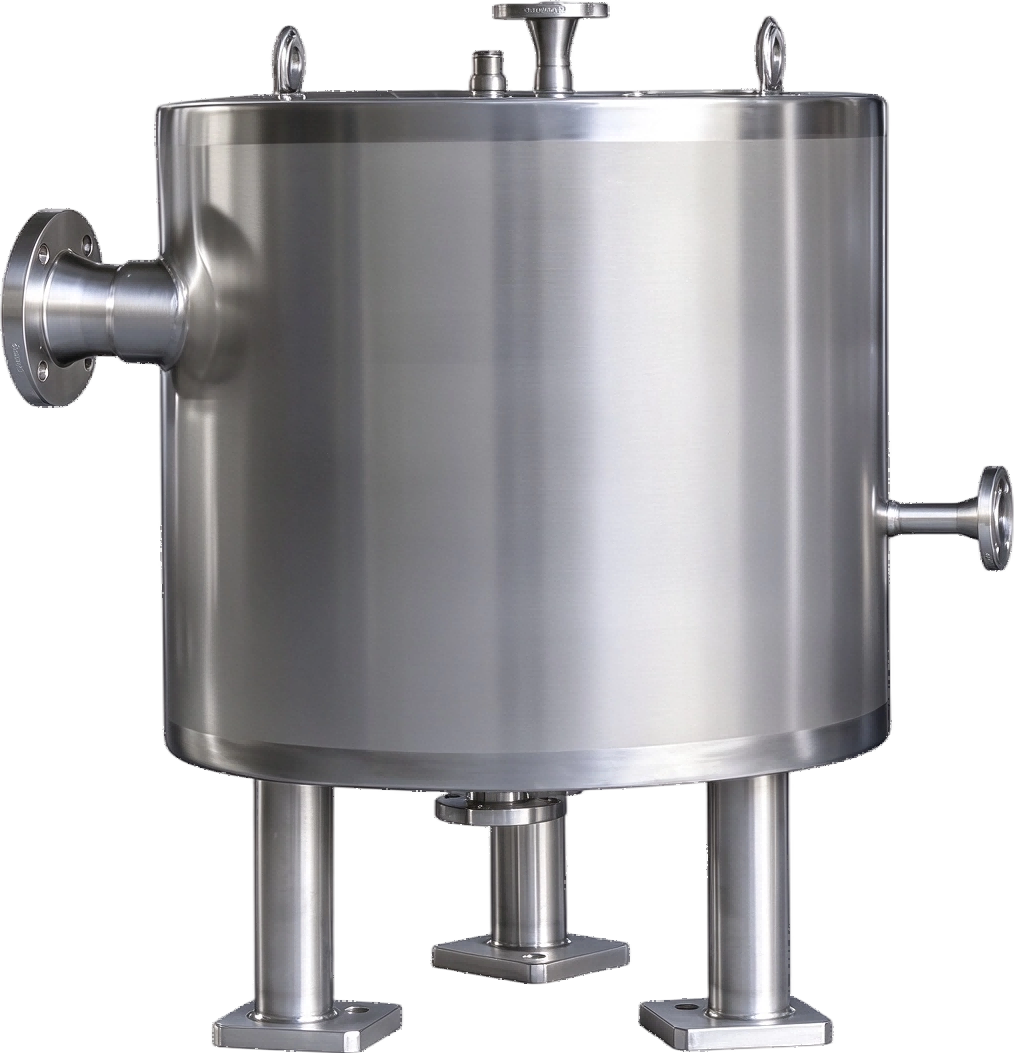
Product Overview
The shell and tube heat exchanger is a classic, highly efficient heat exchange device that offers advantages such as a large heat transfer area, excellent heat transfer performance, simple structure, high processing capacity, wide operating flexibility, and broad adaptability. It is commonly used in industries such as pharmaceuticals, chemicals, petroleum, power generation, dyeing, metallurgy, and food processing.
Key Features & Working Principles
- Heat Exchange — Efficient heating or cooling between the tube-side and shell-side fluids to meet process temperature requirements.
- Enhanced Heat Transfer — The baffles built into the shell force the shell-side fluid to flow across the tube bundle multiple times, increasing turbulence and improving the heat transfer coefficient on the outside of the tubes.
- Flexible Allocation Across Multiple Stages — Pipes can be designed as single-pass or multi-pass structures to accommodate process conditions with varying flow rates, temperature differences, and pressure drops.
- Thermal Stress Relief — Implement temperature differential compensation measures (such as expansion joints or floating head structures) for high-temperature operating conditions to eliminate or reduce thermal stress and ensure the long-term, stable operation of the equipment.
Applications
shell and tube heat exchangers are widely used in the pharmaceutical industry for heating raw materials and excipients for large-volume parenteral solutions, cooling traditional Chinese medicine extracts, and maintaining constant temperatures in aseptic processing areas; in the petrochemical industry for heat exchange involving aromatic hydrocarbons and alkanes, heating of process water, and condensate recovery; in the food industry for fruit juice pasteurization and cooling, heat exchange for dairy product concentration, and edible oil refining; as well as in the power generation, dyeing, and metallurgy industries for cooling water circulation, temperature control of process fluids, and industrial waste heat recovery. Chemical Industry Pharmaceutical Industry Food Industry Petrochemical Industry
Product Structure
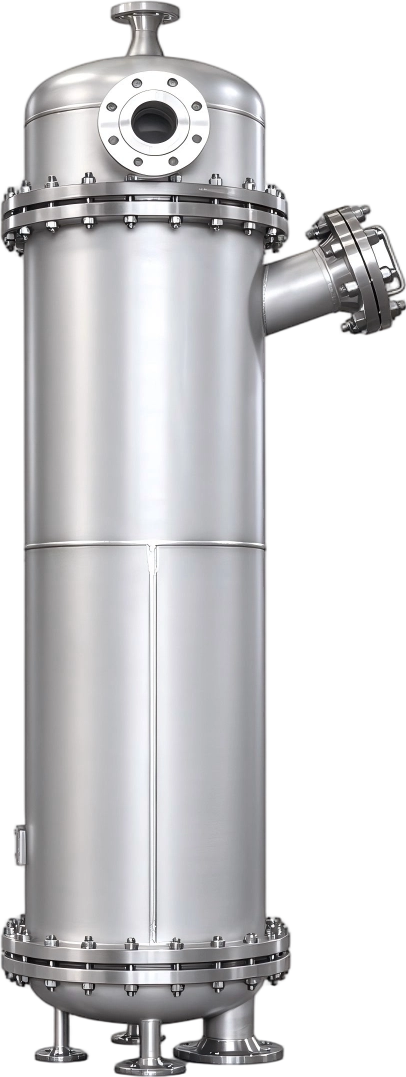
- Main Unit — The shell withstands the fluid pressure in the shell side. It contains a tube bundle and baffles, with the heat exchange tubes secured at both ends by tube sheets, which separate the tube side from the shell side. The tube heads at both ends of the shell are used to distribute and collect the fluid in the tube side.
- Baffle Plate — Installed inside the shell, it increases the fluid velocity in the shell side, forcing the fluid to scour the tube bundle laterally and enhance heat transfer.
- Heat Transfer Tube Bundle — It consists of multiple heat exchange tubes, with the tube-side fluid flowing through the tubes; the standard tube diameter is Φ25 mm, but other sizes such as Φ19, Φ32, Φ38, and Φ45 are also available.
Optional Features
- Custom Materials
- Surface Finishes
- Pipe-in-Pipe Structure
Technical Specifications
| Heat Transfer Area(m²) | Shell Diameter × Shell Length(mm) | Number of Heat Exchange Tubes | Heat Exchange Tube Diameter(mm) |
|---|---|---|---|
| 2 | Φ219×1100 | 24 | Φ25 |
| 3 | Φ250×1050 | 37 | Φ25 |
| 4 | Φ300×1000 | 50 | Φ25 |
| 5 | Φ300×1050 | 61 | Φ25 |
| 6 | Φ300×1500 | 52 | Φ25 |
| 8 | Φ300×2000 | 52 | Φ25 |
| 8 | Φ350×1500 | 71 | Φ25 |
| 10 | Φ350×1700 | 76 | Φ25 |
| 10 | Φ400×1500 | 89 | Φ25 |
| 12 | Φ400×1500 | 102 | Φ25 |
| 15 | Φ400×2000 | 96 | Φ25 |
| 20 | Φ400×2500 | 102 | Φ25 |
| 20 | Φ450×2000 | 127 | Φ25 |
| 25 | Φ500×2500 | 127 | Φ25 |
| 30 | Φ500×2500 | 154 | Φ25 |
| 30 | Φ450×3000 | 127 | Φ25 |
| 40 | Φ500×3000 | 154 | Φ25 |
| 50 | Φ600×3000 | 232 | Φ25 |
| 100 | Φ800×2500 | 510 | Φ25 |
| 150 | Φ900×3500 | 554 | Φ25 |
| 200 | Φ1000×4500 | 452 | Φ32 |
Custom design and manufacturing are available according to users' special requirements, such as material, structure, specification and dimension.